
The company archive contains event photographs from RFID Journal LIVE 2017 and Wireless IoT Tomorrow 2025. The January 2026 company presentation also records participation in Wireless IoT Tomorrow 2025 in Wiesbaden, Germany. The engineering examples below are questions for a technical brief rather than reported conversations or event test results.
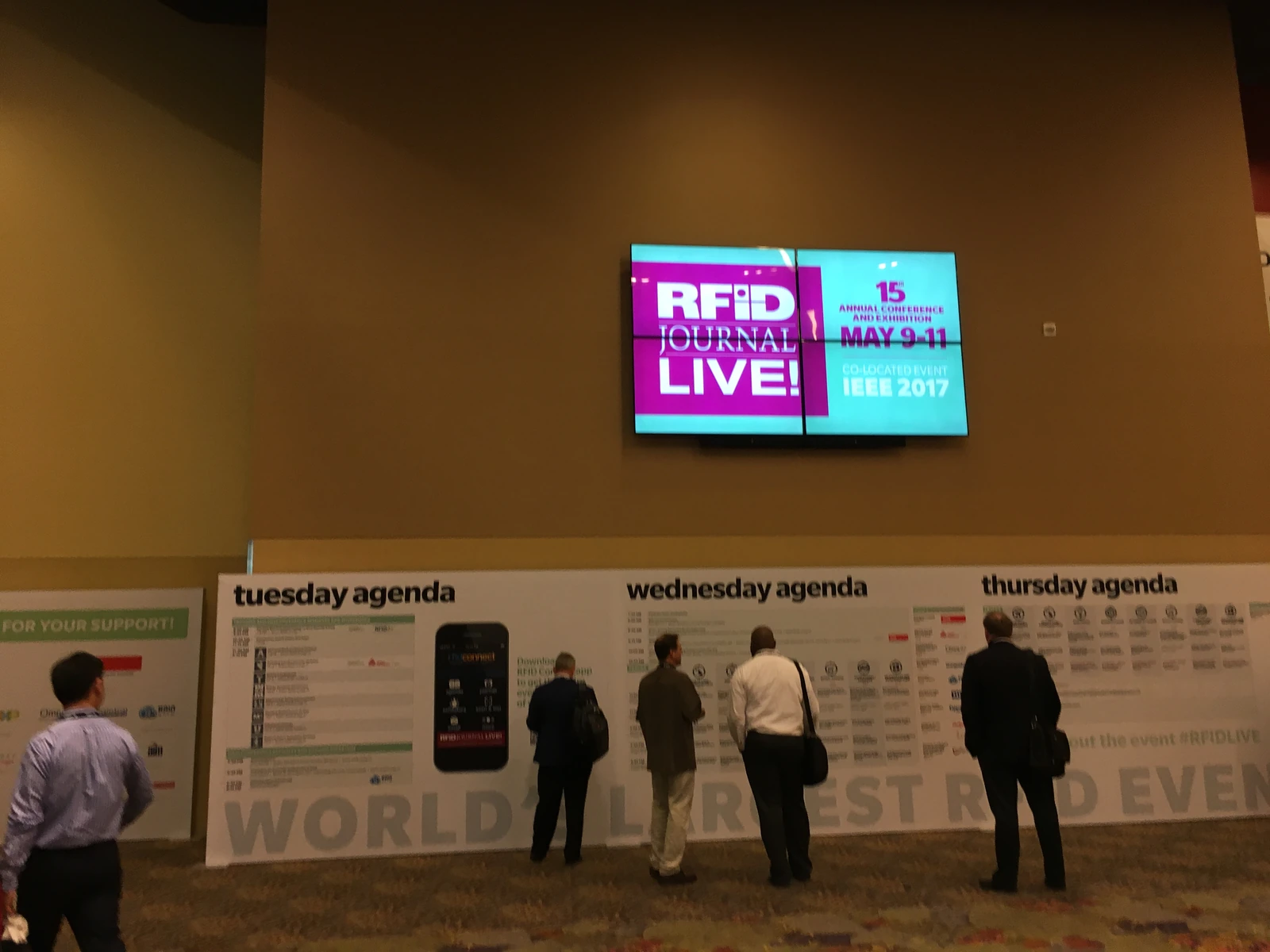
What the RFID Journal LIVE 2017 archive shows
The 2017 archive includes company-booth and event-sign photographs. Retain the event name and year when using these historical images, and identify the products shown before connecting them to a present-day requirement.
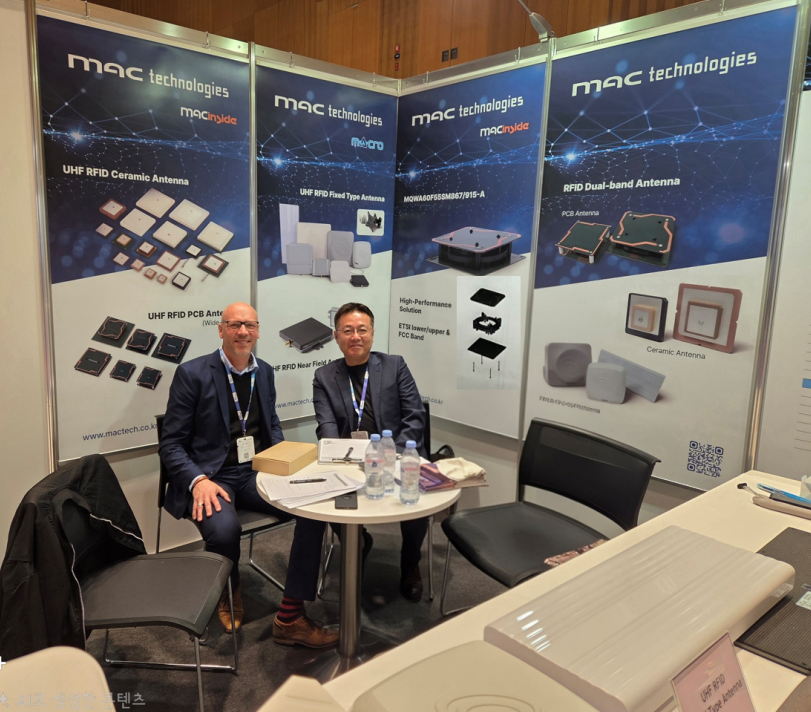
Wireless IoT Tomorrow 2025 Participation
Keep the two event records separate
| Event | Material available for this article | What it supports |
|---|---|---|
| RFID Journal LIVE 2017 | Event-sign and company-booth photographs | The photographed historical event and display |
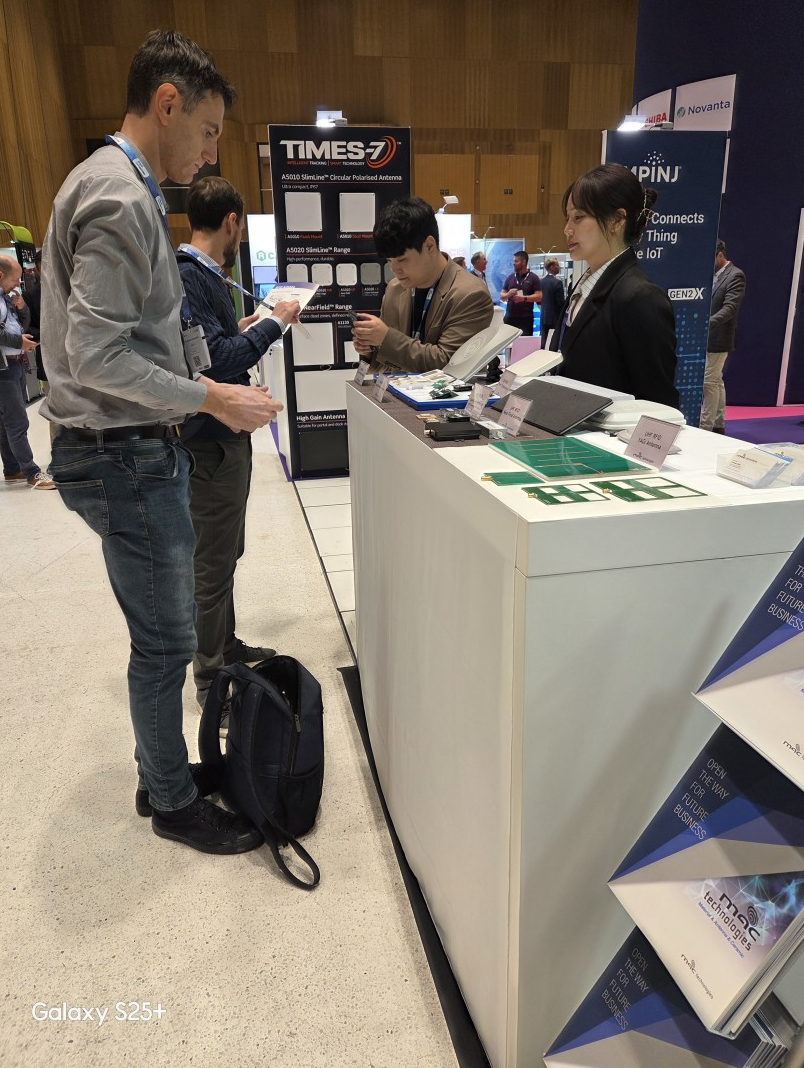
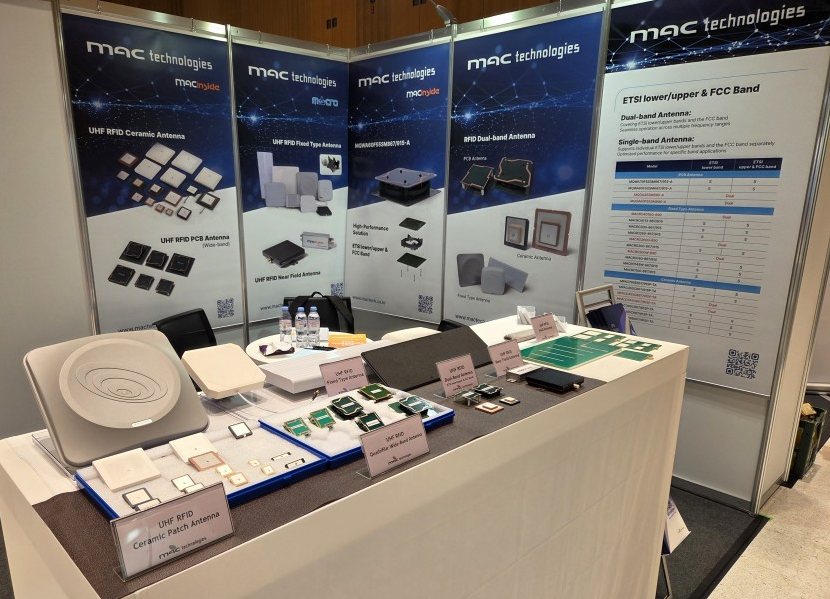
| Wireless IoT Tomorrow 2025 | Company presentation and exhibition-site photographs | Company-reported participation; photographs document the booth, product display, and visitor engagement |
The 2017 images document RFID Journal LIVE, while the 2025 images document MAC technologies Inc.’s participation and booth at Wireless IoT Tomorrow in Wiesbaden. The integration questions in this article are illustrative and should not be presented as event test results.
Turn an RFID question into a testable requirement
Organize a technical discussion around application, operating region, tag and reader combination, polarization, read-zone geometry, mounting, cables, enclosure and environmental conditions. Give each open question an owner and identify the evidence needed for a decision.
Record the operating condition behind each question. “Need longer range” is incomplete; the engineering brief should identify reader power, antenna configuration, tag type, orientation, materials in the read zone, regional band, interference environment, and the current failure mode. This turns a market conversation into a testable requirement.
| Illustrative input | Evidence level | Responsible next step |
|---|---|---|
| Question about the required read zone | market or integration signal | define installed test conditions |
| Request for smaller hardware | packaging requirement candidate | freeze envelope and nearby materials |
| Interest in regional operation | regulatory and bandwidth question | confirm applicable band and approval route |
| Booth or logistics record | Historical event or exhibition record | retain with event and date identity |
Separate observation, requirement, and proof
An observation records what was asked or seen. A requirement states the measurable condition that the product must meet. Performance evidence reports the result from a controlled test. These three layers should remain separate so a promising event discussion is not presented as validated engineering performance.
For example, interest in operation near metal is an observation. A requirement might define mounting distance, surface material, tag population, orientation, reader power, and read-zone boundary. Proof would then be a controlled test report with sample identity and configuration. The event itself supplies none of that performance evidence.
What the Wireless IoT Tomorrow 2025 Archive Shows
The January 2026 company presentation records participation in Wireless IoT Tomorrow 2025 in Wiesbaden, Germany. The accompanying photographs document the exhibition site, company booth, product display, and visitor engagement. Use the displayed product references to define the antenna formats and integration questions relevant to a follow-up technical brief.
Where a discussion involves regulatory or regional operation, confirm the applicable requirements through authoritative sources rather than assuming that an event location defines the product requirement. Where it involves environmental or industrial use, ask for the real installation condition and maintenance expectations.
Build a traceable post-event technical brief
Create one record per meaningful topic. Include event and date, question source category without exposing personal data unnecessarily, application, operating condition, supplied material, assumptions, open technical items, evidence owner, and next decision. Attach photographs or documents only when their rights and relevance are clear.
Rank topics by decision value. A question that exposes an undefined interface or missing validation condition deserves engineering follow-up. A general expression of interest may remain a market note. This prevents engineering time from being assigned according to booth activity alone.
Questions a technical RFID buyer should answer
Before requesting an antenna or RF component review, provide the regional operating band, reader and radio interface, tag type or population, read-zone geometry, polarization, mounting surface, nearby materials, cable and connector, enclosure, environmental conditions, mechanical envelope, validation method, and evidence required for release.
Identify which inputs are measured and which remain targets. If range, coverage or durability has not been checked in the intended installation, put it into the validation plan with a defined test condition and acceptance criterion.
For a technical review with MAC technologies Inc., send the application brief, relevant product or exhibit reference, installation constraints and open measurement questions. This gives the discussion a defined scope and an actionable next step.
References
RFID Journal Events
https://www.rfidjournalevents.com/
Related reading
UHF RFID Antenna Selection for European Projects