
Global RF component supply can be evaluated through the relationships a company identifies and the controls used for each released product. MAC technologies Inc. has confirmed continuing RF antenna supply to customers in Europe, Japan and the United States, together with defense-related RF filter and diplexer supply to IMCA in Türkiye. These company-confirmed references describe supply scope; they are not customer endorsements or project-specific qualification results.
Company-confirmed global RF component supply
The following eight continuing supply relationships were confirmed by MAC technologies Inc. The company presentation also names IMCA, ANKAREF, microsensys and CAEN RFID. Its dated supply history and company archive photographs provide additional context; those records are distinct from the company’s confirmation of continuing supply.

| Country | Organization | Company-confirmed supply scope |
|---|---|---|
| Türkiye | IMCA | Defense-related RF filter and diplexer, continuing supply |
| Türkiye | ANKAREF | RF antenna, continuing supply |
| Germany | microsensys | RF antenna, continuing supply |
| Italy | CAEN RFID srl | RF antenna, continuing supply |
| Italy | KRONOTECH | RF antenna, continuing supply |
| France | Eiffage Énergie Systèmes Electronique | RF antenna, continuing supply |
| Japan | TAKITEK KK | RF antenna, continuing supply |
| United States | IPG Photonics Corporation | RF antenna, continuing supply |
Product scope beyond a single antenna category
The product portfolio includes ceramic and PCB RFID reader antennas, fixed and near-field antennas, GPS/GNSS antennas, and several RF filter constructions. The company presentation also describes diplexer development and supply. These categories give buyers a starting point for discussing the operating band, package, interface, and acceptance requirements of a new project.
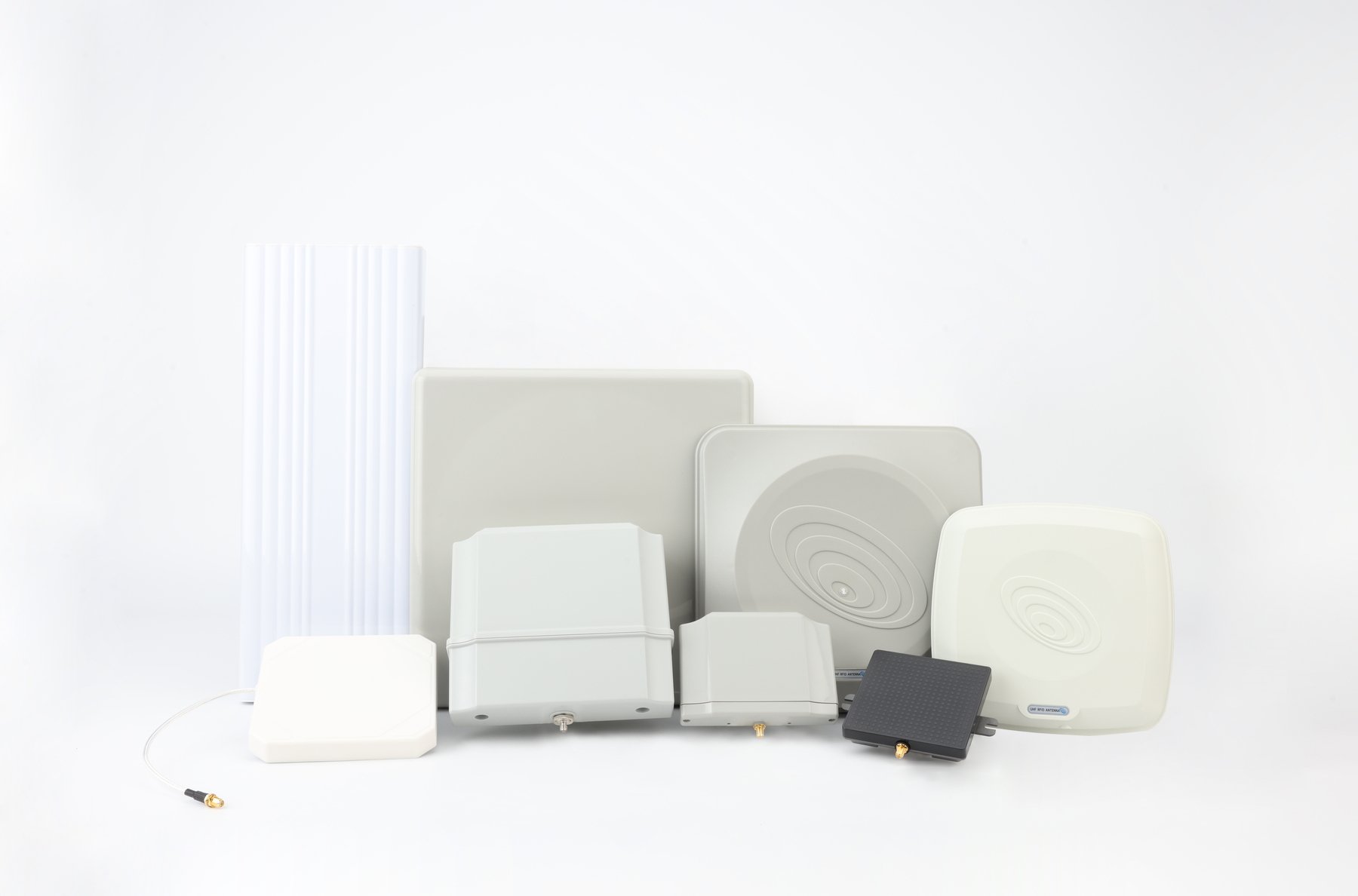
For a new project, connect the selected product family to the controlled drawing, material specification, test method, sample identity, and release record. This turns relevant experience into a defined manufacturing and verification plan.
ISO certificate records and scope
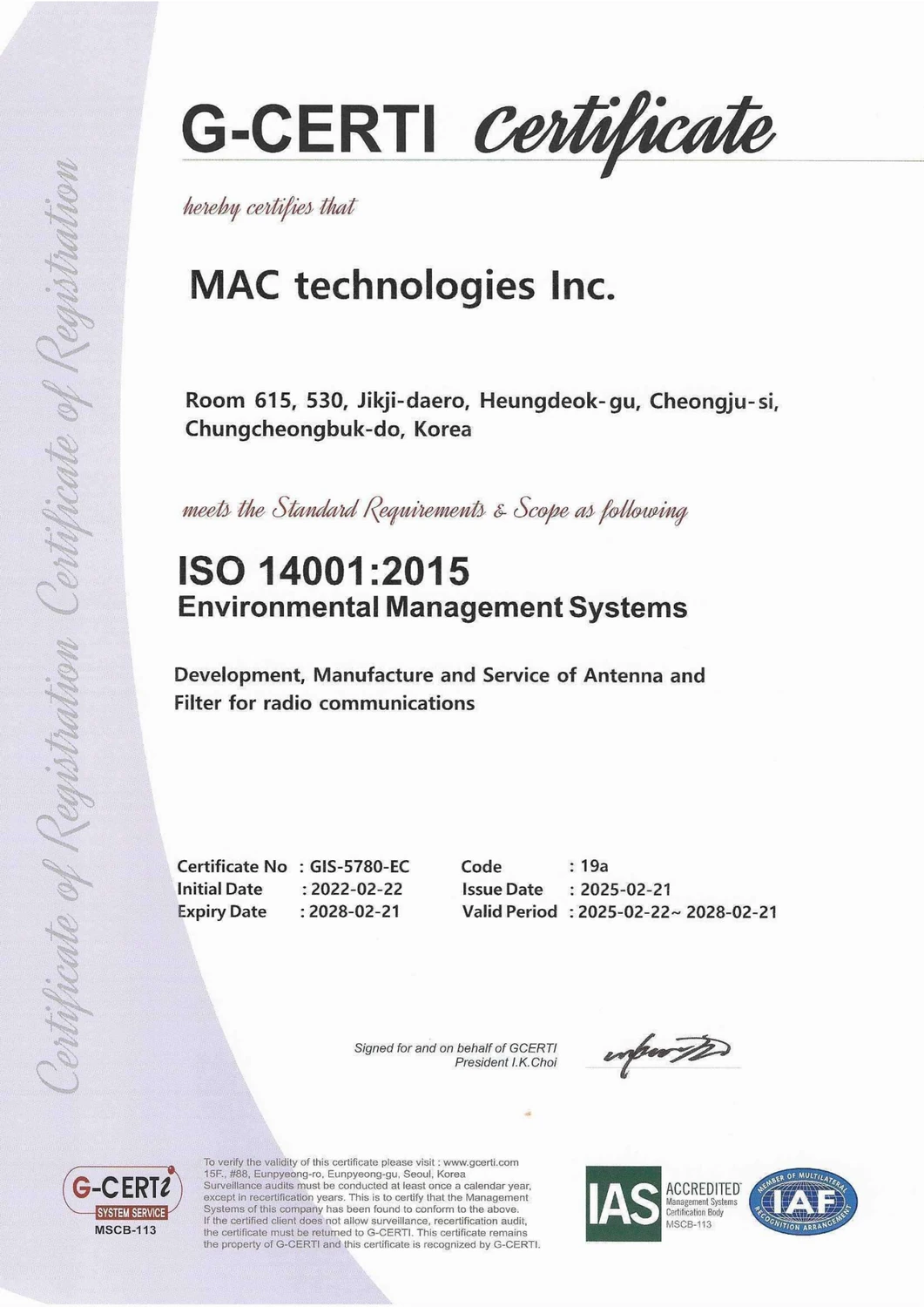
The supplied ISO 9001:2015 and ISO 14001:2015 certificates identify G-CERTI as the issuer and carry certificate numbers GIS-5780-QC and GIS-5780-EC. They state a certification period from 22 February 2025 to 21 February 2028 and cover development, manufacture, and service of antennas and filters for radio communications.
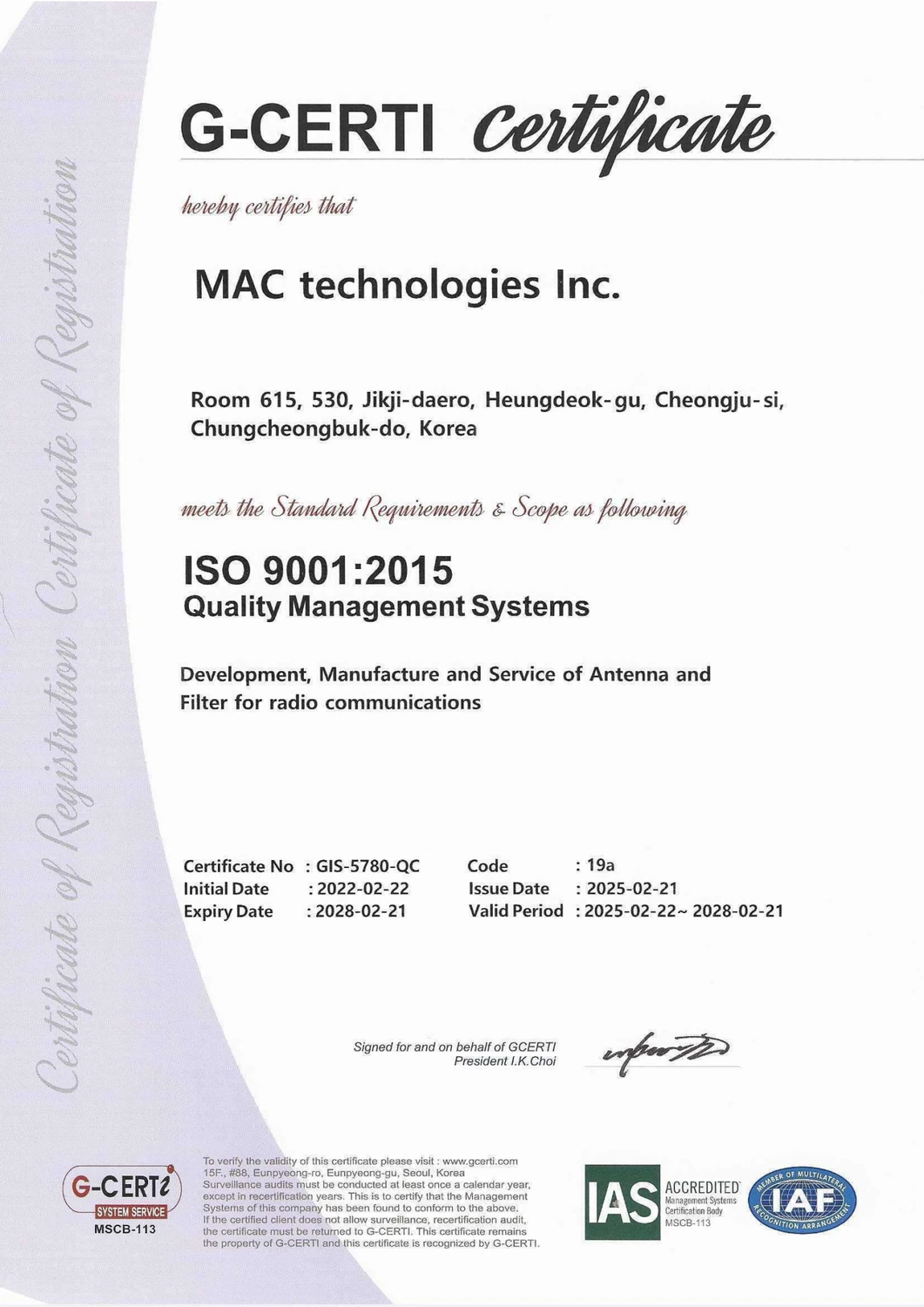
The certificate scope should be quoted as written. It does not by itself prove a project-specific process, customer approval, product certification, or performance result. A buyer should verify certificate status with the certification body, confirm that the relevant site and activity fall within scope, and review any transition requirement associated with a newer edition of an applicable standard before release.
Quality-management controls in the supplied records
The quality-management records identify controls for incoming inspection, production and process operation, testing and inspection, and outgoing inspection. They also list product identification, LOT labels and issuance records, nonconforming-product control, product and process change notices, corrective-action records, internal audits, measurement-resource management, calibration certificates, and document and record control.
The company also confirmed current operation of incoming, process and outgoing or final inspection, LOT and traceability management, nonconformance management and change management. The document register corroborates these control categories. Project-specific limits and completed inspection records remain part of the individual supply agreement.
| Control area | Evidence a buyer can request for the project | Decision supported |
|---|---|---|
| Incoming inspection | material identity, receiving record, applicable acceptance criteria | whether incoming material is connected to the approved specification |
| Process inspection | route, controlled check, sample or LOT identity, result record | whether the production state remained linked to the released process |
| Outgoing or final inspection | final criteria, result, product identity, disposition | whether the shipment was reviewed against the agreed release basis |
| LOT and traceability | LOT identifier and links to material, process, inspection, and shipment records | whether a delivered item can be traced through the evidence chain |
| Nonconformance and CAPA | containment, disposition, root-cause review, corrective-action record | whether an exception was controlled and recurrence addressed |
| Change control | proposed change, impact review, approval, verification, effective revision | whether a material, design, process, or source change was visible and authorized |
Buyer-side verification before nomination and release
A supplier-quality review should sample the system rather than rely on document titles. Ask for the current certificate and scope, the product quality plan, inspection points, traceability method, and calibration status for critical equipment. Also define the nonconformance workflow, change-notification boundary, record-retention period, and evidence package expected with production deliveries.
Then connect those controls to the actual RF requirement. For an antenna, define the operating band, installation state, ground or mounting condition, connector and cable, reference plane, measurement method, and acceptance boundary. For a filter or diplexer, define the ports, passbands, rejection regions, insertion-loss and return-loss conditions, power context, temperature, fixtures, and branch interaction. The RF measurement facilities article explains why equipment context must be paired with a controlled method.
Commercial and engineering boundaries should also agree. Identify whether the work is build-to-print OEM, supplier-led ODM, or joint development; who controls drawings and materials; how substitutions are handled; and what must be approved before a revision enters production. The Korean RF component manufacturing partner guide provides a practical structure for that review.
To discuss a new supply project, send MAC technologies Inc. the intended application, drawing or mechanical envelope, operating bands, RF limits, environmental conditions, and expected production scope. Agree the prototype evidence, change controls, and release documents alongside the commercial terms.
References
MAC technologies Inc. ISO 9001 Certificate
MAC technologies Inc. ISO 14001 Certificate
회사표준 목록 및 서식 목록 (MAC-07-05-02)
Company presentation – MAC technologies Inc. (Dec. 26, 2025)
ISO 9001:2015
Certificate data: supplied English ISO 9001 and ISO 14001 certificates, page 1, certificate numbers GIS-5780-QC and GIS-5780-EC, in the company certificate collection.
MAC technologies Inc. factual confirmation: continuing overseas RF component supply and current quality-control operation. The named relationships are company-confirmed facts, not customer testimonials.
Related reading
OEM RFID Antenna Manufacturing from Prototype to Mass Production
Selecting a Korean RF Component Manufacturing Partner
Inside the RF Measurement and Antenna Testing Facilities at MAC technologies Inc.