
Define the communication link
Dish antenna selection should start with the communication link and installation boundary, not with a catalog gain number. Record frequency, bandwidth, polarization, required availability, terminal geometry, pointing method, feed interface, cable or waveguide path, and the assumptions that belong in the link budget. Keep the desired reliability target separate from any antenna property.
On this page
The link record should identify what is known and what remains open. Atmospheric conditions, clutter, platform motion, blockage, and interference can affect the system even when the antenna itself is unchanged. Do not invent a communication range from a nominal specification.
Connect aperture, gain, and beamwidth
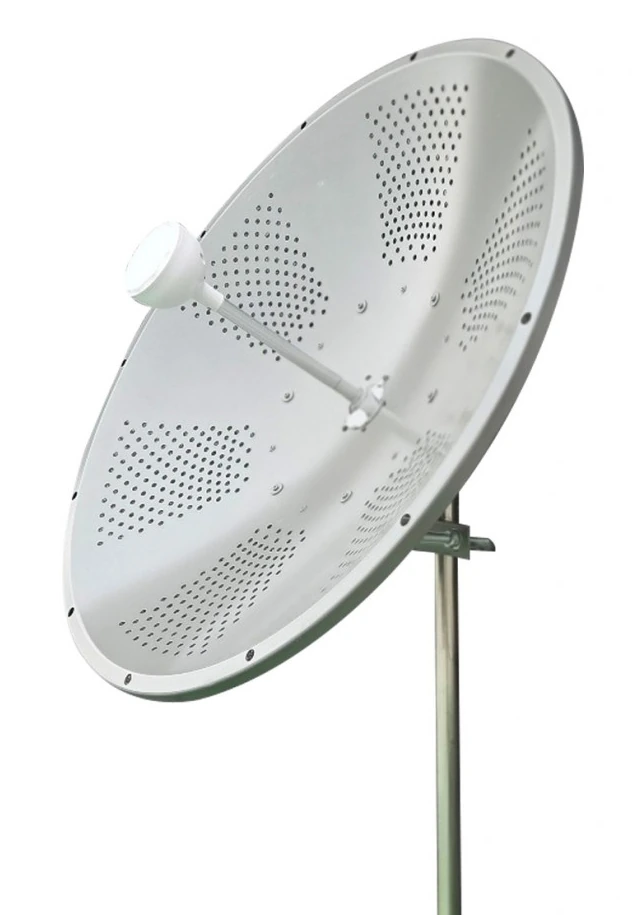
An aperture creates a tradeoff between directivity, beamwidth, physical size, and pointing sensitivity. Compare candidate dishes at the same frequency and reference condition. Ask whether gain includes the feed, radome, losses, and measurement uncertainty. Beamwidth should be understood in both principal planes and tied to the pointing method.
| Selection input | Record | Why it matters |
|---|---|---|
| Frequency | center, band, channel plan | sets electrical size and feed behavior |
| Aperture | diameter, shape, surface tolerance | influences directivity and packaging |
| Beamwidth | principal-plane values, sidelobe context | sets alignment and interference sensitivity |
| Link inputs | power, losses, receiver threshold, margin | prevents gain-only decisions |
Use the same assumptions for every candidate. A wider aperture may improve directivity but increase mount, wind, alignment, and service demands.
Check polarization and the feed interface
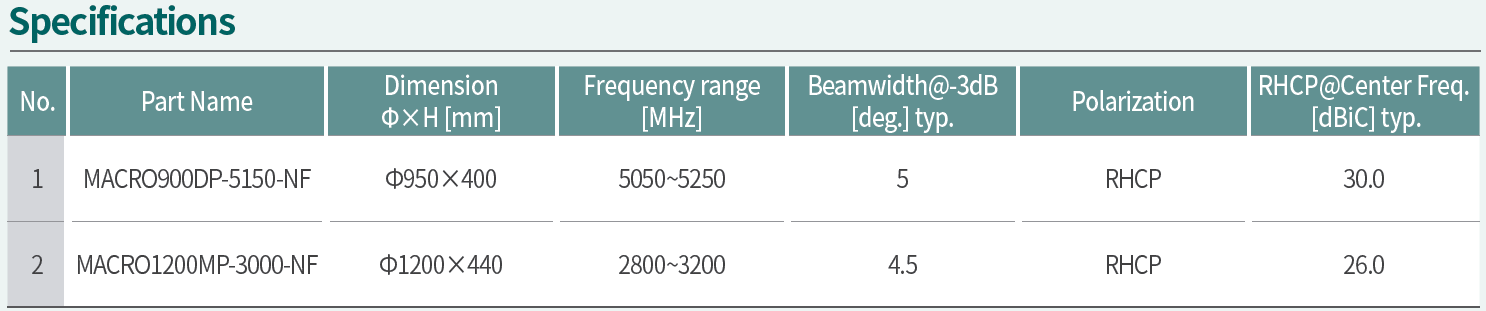
Specify linear or circular polarization, orientation, axial-ratio or cross-polarization requirement where relevant, and the expected polarization at both ends of the link. The feed, OMT, transition, connector, waveguide, and cable can become the dominant interface risk. Draw the reference plane and identify which part of the assembly is included in each measurement.
IEEE 149-2021 offers recommended practice for antenna measurement planning. Use that context to define pattern, gain, polarization, and facility conditions, then write project-specific acceptance limits. The standard is not evidence of a supplier-specific performance result.
Design the pointing and mount decision
Review azimuth and elevation range, adjustment resolution, locking method, mast or bracket stiffness, cable bend radius, service access, and any stabilization interface. Pointing accuracy is a system property: dish beamwidth, mount repeatability, platform movement, and installation procedure all contribute.
Include mechanical tolerances, center of gravity, fastener access, corrosion protection, and the effect of a radome or cover. A dish that meets an RF comparison on a fixture still needs an installation review that reflects its support structure.
Tailor environmental and acceptance checks
If the dish is exposed to wind, temperature, vibration, moisture, or dust, define the actual life-cycle stresses and the fixture that represents them. The DLA ASSIST record for MIL-STD-810 describes tailoring rather than a universal test recipe. Use the process to choose relevant exposures and post-test checks; do not call the antenna certified merely because the document is cited.
Run a pre-test RF baseline and repeat the agreed pattern, feed, and interface measurements after the exposure or mechanical intervention. Record the article revision, mount, cable or waveguide, alignment state, instruments, and acceptance criteria.
Build a buyer-ready comparison
For a dish antenna review with MAC technologies Inc., provide the frequency and polarization plan, aperture limits, feed drawing, pointing method, link-budget inputs, mount loads, environmental conditions, and acceptance tests.
RF technology insights provides related engineering context, while RF antenna and component resources and the applications hub organize further review.
The dish antenna selection record should make clear which values are measured, which are calculated, and which still require an installed or field check. Revisit the selection when the feed, pointing method, or platform boundary changes.
Approve the selection with open items visible
The final selection record should list the chosen geometry, rejected alternatives, alignment method, link-budget assumptions, and evidence still required. If frequency, terminal location, mount, or radome changes, reopen the comparison rather than carrying forward an unqualified conclusion. Reliable long-distance communication depends on a controlled link and installation, not on a single dish headline value.
For moving or serviceable platforms, add a pointing-error budget that separates mount repeatability, alignment procedure, structural movement, and operator or control-system resolution. Do not hide these terms inside a generic “accurate mount” statement. State which condition is checked at installation and which condition is monitored during operation.
The feed and transmission path deserve a separate acceptance record. Identify connector torque or waveguide interface, cable length, bend limits, weather sealing, and any transition included in the measurement. If a radome is used, compare the antenna with the production-intent cover and state how it affects the pattern or polarization evidence. This keeps the selection tied to the actual terminal rather than an open-air component comparison.
For procurement, retain the assumptions used to compare aperture and link margin. Include the terminal height, obstruction model, polarization alignment, cable or waveguide loss, and receiver condition that the link calculation uses. Those inputs can be revised later, but they should not disappear when a supplier quote is condensed into a short comparison table. A repeatable assumption set lets engineering explain why a different dish or mount is needed when the installation changes.
References
IEEE 149-2021 — IEEE Recommended Practice for Antenna Measurements
MIL-STD-810 — Environmental Engineering Considerations and Laboratory Tests
https://standards.ieee.org/ieee/149/6667/
https://quicksearch.dla.mil/qsDocDetails.aspx?ident_number=35978