
OEM vs ODM antenna manufacturing is primarily a decision about design ownership, responsibility, and deliverables. An OEM arrangement usually builds to buyer-controlled requirements, while an ODM arrangement includes more supplier-led design work. Neither label defines intellectual property, validation, compliance, tooling, change control, or acceptance by itself; those items must be written into the project documents.
The sourcing model should fit the buyer's engineering capacity and risk ownership. The exact OEM or ODM boundary should therefore be defined project by project through the requirement baseline, responsibility matrix, deliverables, validation plan, and commercial agreement.
Agree the scope before requesting quotations
Assign responsibility for RF architecture, mechanical design, simulation, prototypes, production preparation, compliance evidence, and support. List the design files and test data to be delivered with each quotation so that cost comparisons cover the same work.
Ask each supplier to identify:
the input specification and who approves requirement changes
ownership and permitted use of drawings, models, source data, and tooling
prototype stages, quantities, and acceptance criteria
responsibility for antenna tuning in the final enclosure
component selection, approved substitutions, and obsolescence handling
production tests, traceability, nonconformance, and corrective action
documentation delivered at each milestone
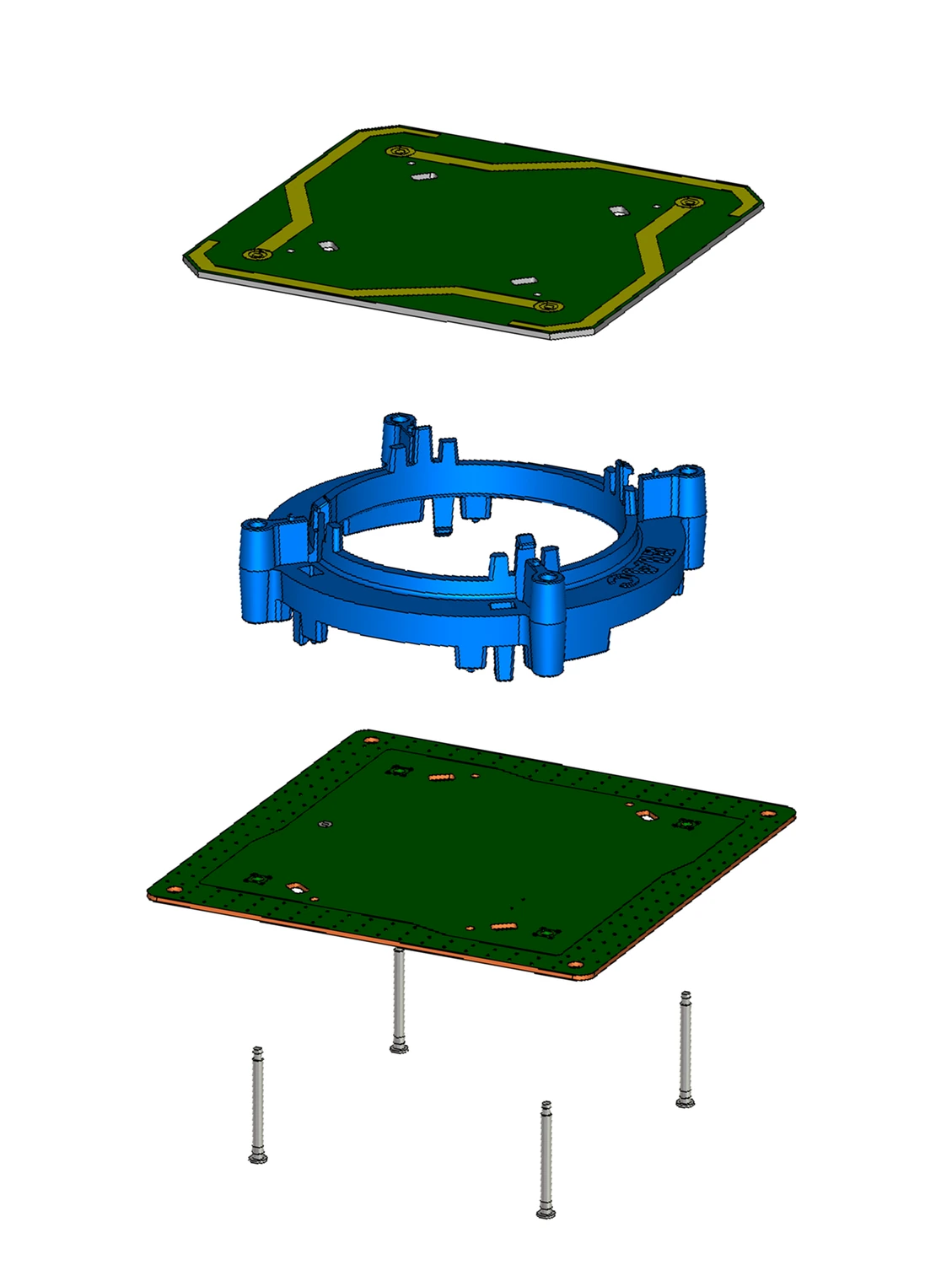
| Area | OEM | ODM | Must Be Contractually Defined |
|---|---|---|---|
| Design authority | Buyer normally provides or controls more of the product design | Supplier normally contributes or controls more of the underlying design | Final approval authority, permitted changes, and ownership of each design output |
| Requirements ownership | Buyer-controlled requirements commonly define the build | Supplier platform assumptions may form part of the starting point | Requirement baseline, exceptions, change approval, and conflict resolution |
| IP and usage rights | Buyer may expect rights in buyer-provided or commissioned design data | Supplier may retain rights in pre-existing designs and reusable platforms | Ownership, license scope, confidentiality, exclusivity, improvements, and transfer rights |
| Tooling | Custom tooling may be funded or specified by the buyer | Existing or supplier-controlled tooling may be part of the offer | Ownership, access, maintenance, storage, modification, and disposition |
| Prototype responsibility | Buyer may provide more design inputs and acceptance criteria | Supplier may lead more concept and prototype activity | Stage definitions, quantities, cost, evidence, and approval conditions |
| Validation | Buyer commonly defines application acceptance | Supplier may provide platform or component evidence | Test article, method, reference plane, sample count, raw data, and pass/fail authority |
| Compliance responsibilities | Outsourcing production does not automatically transfer the finished-product manufacturer's duties | Supplier-led design does not by itself transfer market obligations | Applicable market role, technical-file inputs, declarations, records, and responsible reviewers |
| Change control | Production changes should remain within buyer-approved limits | Supplier platform changes may affect multiple customers or revisions | Notification threshold, approval timing, requalification, and cost ownership |
| Production documentation | Buyer may require build-to-print records and traceability | Supplier may rely on controlled internal platform documentation | Drawings, bill of materials, process records, tests, certificates, retention, and access |
| Exit plan | Transfer may depend on buyer-owned data and tooling | Transfer may be constrained by supplier-owned IP or platform assets | Files, tooling, approved components, service parts, transition support, and surviving rights |
Keep legal manufacturer responsibility visible
In OEM vs ODM antenna manufacturing for products placed on the European market under a company's own name or trademark, outsourcing design or manufacture does not automatically transfer the manufacturer's regulatory responsibilities. The European Commission Blue Guide 2022 explains that a manufacturer using subcontractors must retain overall control and the information needed to meet applicable Union harmonisation obligations.
This principle is important when choosing an ODM: supplier-led engineering can change the working relationship, but it does not replace the finished-product manufacturer's conformity assessment, technical documentation, or market obligations. Assign regulatory tasks explicitly and have qualified legal or compliance personnel confirm the applicable rules.
Define evidence and quality controls
Review the supplier’s quality-management scope alongside its project quality plan. ISO 9001 addresses the management system; the antenna specification and test records establish product acceptance. If certification is required, confirm the certificate scope and status with the issuing body.
The quality plan should identify critical RF and mechanical characteristics, measurement equipment, calibration, sample plans, process changes, lot traceability, and records retained. For antennas, include the measurement reference plane and the installed configuration used for tuning or acceptance.
Use milestones that expose risk early
A practical sequence is requirements freeze, concept review, simulation review, engineering prototype, enclosure-integrated prototype, design verification, production-intent build, and release. At each gate, record open requirements, deviations, evidence delivered, and the party authorized to approve changes.
Labelled antenna samples prepared for an exhibition illustrate the need to identify the hardware used in a review. For a project prototype, link the sample identity to its drawing and test record.
For an OEM build, check that the buyer’s design data are complete and manufacturable. For an ODM project, review the supplier’s design assumptions, design-file rights, and validation deliverables. In both cases, agree access to tooling, files, approved components, and service parts.

Before contract approval, confirm that the parties have:
named the design authority and requirement owner for every work package;
listed pre-existing and project-created IP, usage rights, and confidentiality limits;
assigned ownership and control of tooling, fixtures, and test assets;
defined prototype stages, acceptance evidence, deviations, and approval authority;
assigned finished-product compliance tasks without assuming that outsourcing transfers legal responsibility;
agreed change-notification, revalidation, traceability, and record-retention rules; and
documented an exit path for files, tooling, components, service support, and unresolved nonconformances.
Frequently asked questions
Is ODM always faster? Not necessarily. Supplier-led design may reduce some buyer workload, but requirement ambiguity, integration changes, compliance, and approval cycles still control timing.
Who owns the antenna design? The commercial label does not answer that. Ownership and usage rights must be stated in the contract and deliverable list.
Does ISO 9001 certification prove product performance? No. It concerns a quality management system; product-specific performance requires applicable specifications and test evidence.
See RF technology insights, RF antenna and component resources, and the applications hub for related engineering material.
Clarify scope and deliverables for an antenna manufacturing project.
References
European Commission Blue Guide 2022
ISO 9001:2015 — Quality Management Systems
https://eur-lex.europa.eu/legal-content/EN/TXT/?uri=CELEX%3A52022XC0629%2804%29
https://www.iso.org/standard/62085.html
Related reading
OEM RFID Antenna Manufacturing from Prototype to Mass Production